What’s the water?
Water is one of the most important substances on Earth. It covers about 71% of our planet’s surface and is essential for all forms of life. As kids, understanding why water is so important can help us appreciate its role in keeping us healthy, supporting wildlife, and even shaping our planet.
Firstly, water is crucial for our bodies. Did you know that our bodies are made up of about 60% water? We need water to stay hydrated, which means our bodies have enough water to work properly. Water helps us digest our food, transport nutrients around our bodies, and even regulate our temperature when we get hot or cold.
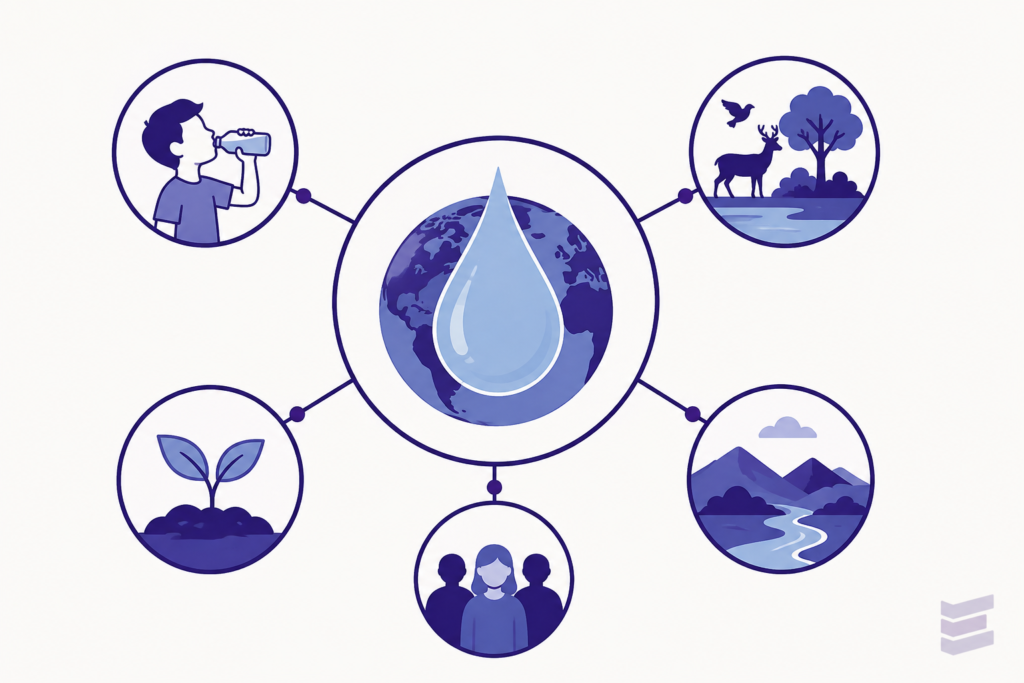
Secondly, water is vital for plants and animals too. Plants use water to grow and make their own food through a process called photosynthesis. Animals, from tiny insects to large elephants, also need water to drink to stay alive. Without water, plants and animals wouldn’t be able to survive.
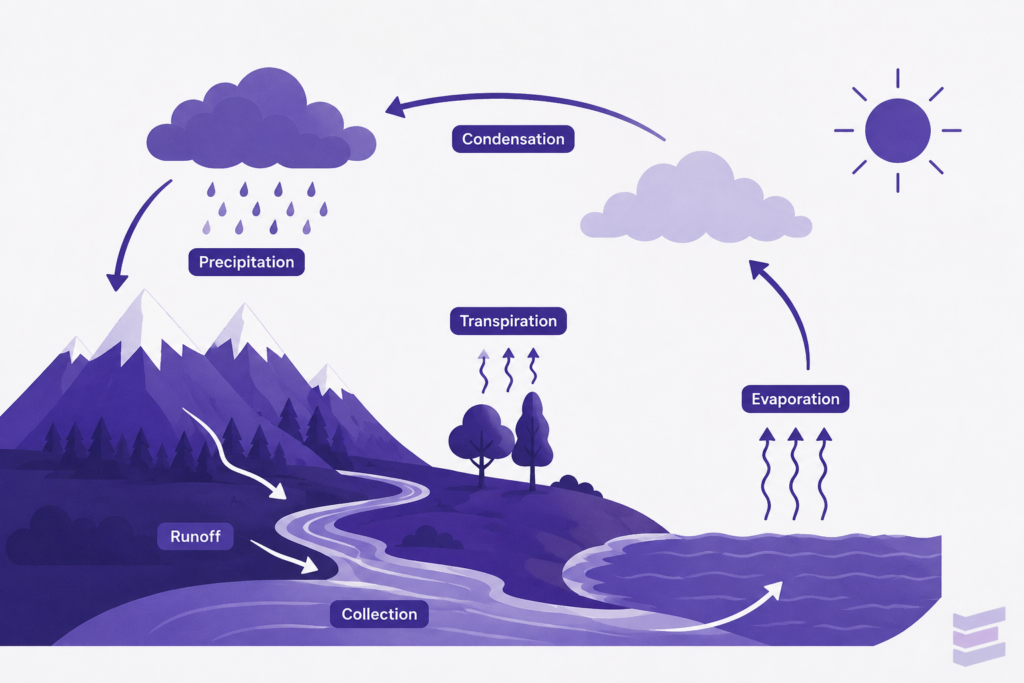
Water also plays a big role in the weather and climate. When the sun heats up the water in oceans, lakes, and rivers, it evaporates and turns into water vapor in the air. This water vapor eventually cools down and forms clouds. When the clouds get heavy with water droplets, they release rain or snow, which is called precipitation. This cycle of evaporation, condensation, and precipitation is called the water cycle, and it helps keep our planet’s weather patterns balanced.
In addition to being essential for life, water is also important for fun and enjoyment. We use water for swimming, playing in the rain, and even making cool water games during hot summer days. Water is also used to grow fruits and vegetables that we eat, and it helps farmers grow crops to feed people and animals all around the world.
It’s important for us to take care of water and not waste it. Even though water seems like it’s everywhere, only a small percentage of it is actually freshwater that we can drink. We can help by turning off the tap when we brush our teeth, taking shorter showers, and not letting water run unnecessarily.
Freshwater, Saltwater, Pure Water and Drinkable water.
Let’s distinguish the terms Freshwater, Saltwater, Pure Water and Drinkable water.
- Freshwater vs. Saltwater:
- Freshwater: Water with a low concentration of dissolved salts, found in lakes, rivers, underground aquifers, and some ice caps.
- Saltwater: Water with a high concentration of dissolved salts, especially sodium chloride (common salt), typical of oceans and seas.
- Pure Water:
- Pure water: Water that does not contain impurities or dissolved substances. In nature, it’s difficult to find completely pure water due to its tendency to dissolve minerals and gases from the environment.
- Drinkable Water:
- Drinkable water: Water that is safe for human consumption according to established quality standards set by health and regulatory authorities. It doesn’t necessarily need to be chemically pure but must be free from contaminants that pose a risk to human health.
The water cycle
Now, about the water cycle:
The water cycle describes the continuous movement of water on, above, and below the surface of the Earth. Water is constantly moving between the atmosphere, oceans, rivers, lakes, soil, living organisms, and other reservoirs. During this cycle, water can change from liquid water to water vapor and back into liquid or solid forms.
The Sun provides most of the energy that drives the water cycle. As water moves through the environment, several interconnected processes take place.
Evaporation
Evaporation occurs when solar energy heats liquid water at the Earth’s surface. Water from oceans, lakes, rivers, and other bodies of water changes from a liquid into water vapor, which rises into the atmosphere.
Evaporation is one of the main ways water enters the atmosphere. Warmer conditions generally increase the rate at which water evaporates.
Transpiration
Water also enters the atmosphere through transpiration, a process carried out by plants. Plants absorb water from the soil through their roots and transport it throughout their tissues. Some of this water is eventually released into the atmosphere as water vapor through tiny openings in their leaves.
Evaporation and transpiration work together to move significant amounts of water from Earth’s surface into the atmosphere.
Condensation
As water vapor rises into the atmosphere, it encounters cooler air. The water vapor loses thermal energy and changes into tiny liquid water droplets.
This process is called condensation. The droplets can gather around microscopic particles in the atmosphere and form clouds. If temperatures are low enough, water may also form ice crystals within clouds.
Precipitation
As water droplets and ice crystals inside clouds collide and grow, they eventually become large and heavy enough to fall toward Earth’s surface. This process is known as precipitation.
Depending on atmospheric conditions and temperature, precipitation can reach the surface as rain, snow, sleet, or hail.
Precipitation returns water from the atmosphere to Earth’s surface, where it can follow different pathways.
Runoff
When precipitation reaches the ground, some of the water flows across the surface instead of entering the soil. This movement is called runoff.
Runoff can flow downhill and form or feed streams and rivers. Eventually, this water may reach lakes, seas, or oceans, returning it to larger bodies of water.
The amount of runoff depends on factors such as the intensity of precipitation, the slope of the land, vegetation, and the ability of the soil to absorb water.
Infiltration
Not all precipitation remains on the surface. Some water seeps into the soil, a process called infiltration.
Once inside the ground, water can move through spaces between soil and rock particles. Some of it can replenish groundwater reserves, while some may continue moving underground and eventually reach streams, rivers, lakes, or other bodies of water.
Infiltration is therefore an important pathway through which water moves below Earth’s surface.
Collection
Water that reaches rivers, lakes, oceans, and other bodies of water becomes part of Earth’s water reservoirs. This stage is often referred to as collection.
From these reservoirs, water can once again be heated by solar energy and evaporate, beginning another cycle.
A Continuous Cycle
The water cycle does not have a true beginning or end. Evaporation, transpiration, condensation, precipitation, runoff, infiltration, and collection occur continuously and are interconnected.
Through these processes, water constantly circulates between the atmosphere, Earth’s surface, underground reservoirs, and living organisms, allowing the same water to be reused again and again throughout Earth’s natural systems.
Water is truly amazing and important for so many reasons. It keeps us healthy, supports plants and animals, affects our weather, and adds fun to our lives. By learning about water and taking care of it, we can make sure that it continues to be available for us, for animals, and for future generations to enjoy. So, let’s appreciate and protect our precious water!
These processes collectively ensure the recycling and distribution of Earth’s water resources.
You can read more about this topic in https://ensambledeideas.com.ar/all-about-mixtures/